
The Legacy of a TCM Pioneer
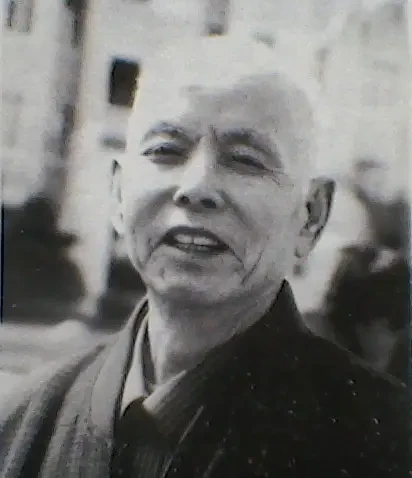
Dedicated to the advancement and preservation of Traditional Chinese Medicine, Wan Yousheng's life's work bridged the gap between classical antiquity and modern medical practice. His methodologies, writings, and teachings continue to resonate across generations of practitioners and scholars.
"His work did not merely treat patients — it preserved a living tradition, transmitting through his writings what centuries of accumulated wisdom had entrusted to him."
The manuscripts, case records, and treatises now held in this archive represent the most complete surviving record of his clinical and scholarly output. Many of these documents are being translated into English for the first time, under the direction of his great-grandson, Roger Zhu.
A Life in Medicine
Key milestones across decades of scholarship, practice, and teaching.
Foundations of a Scholar
Born in 1917 in Xinjian, Jiangxi, Wan Yousheng spent his youth studying classical literature and Confucianism for a decade. Driven by his family's heritage—his great-grandfather having been a merchant-physician—he followed his father's wish to revive the family's medical lineage, laying a profound cultural foundation for his future medical career.
Apprenticeship & Classical Study
In 1934, he formally began his systematic study of Traditional Chinese Medicine by enrolling in the Jiangxi Provincial Medical College. Over three rigorous years of study, he mastered the classical texts, graduating in 1937 equipped with the theoretical knowledge that would define his lifelong practice.
Establishing Clinical Practice
Following his graduation, his early medical career coincided with the turbulent years of the Sino-Japanese War and civil conflicts. He practiced medicine across the towns and villages along the Gan River. Through these arduous years, he accumulated immense clinical experience and steadily built a stellar reputation as a healer. In 1951, he began his official work with the Jiangxi Provincial Health Department.
Teaching & Major Publications
Serving as a Professor at Jiangxi TCM College and the Director of the Jiangxi Provincial TCM Research Institute, he dedicated his life to teaching and scholarship. He boldly proposed the integration of the Shanghan (Cold Damage) and Wenbing (Warm Disease) schools, creating a unified theoretical system for exogenous febrile diseases that stood unparalleled in the national TCM community.
National Recognition
He led the national "Seventh Five-Year Plan" scientific research project on treating acute medical conditions using his unified febrile disease theory. This monumental work earned him the 1991 State Administration of TCM Science and Technology Progress Award. In recognition of his exceptional contributions, he became one of the first advanced intellectuals to receive a special allowance from the State Council.
A Lasting Contribution to Medicine
Leaving behind over 130 academic papers and foundational textbooks such as Essentials of Cold Damage, Treatise on the Unification of Cold and Warmth, and Febrile Diseases, his legacy endures. He believed TCM must continuously innovate to keep pace with modern science, a philosophy that continues to guide the global medical community today.